Tuesday, August 30, 2011

Tasty Tuesday!

Cucumber Kimchi (Oi-Sobagi)


     I'll be the first to admit that this week's Tasty Tuesday post may not be for everyone. I bring to you cucumber kimchi or in Korean, "oi-sobagi". If you aren't familiar with kimchi, it is the national dish of both Koreas and as much as a daily staple as rice. There are many different varieties (it is mostly made using cabbage) but they all have the same basic ingredients or red pepper, onion, and sometimes carrots. It can be extremely spicy or mild depending on your preference. I often hear from non-kimchi eaters that the vegetables in kimchi are rotten. This is a misconception but the mixture is slightly fermented much the same way pickles are slightly fermented. This fermentation allows the kimchi to be naturally preserved. I still choose to refrigerate mine but some people think it is unnecessary since kimchi was invented thousands of years before refrigeration (nearly 3000 thousand years before).

     There are two reasons I decided to make kimchi and share it with you this week. The first reason is that I have been overwhelmed with cucumbers from my own garden and the Towson University Urban Farm and needed to find something to do with them. Cucumber kimchi is my favorite type of kimchi so I decided to make some. The second reason is because of my own Korean heritage. My grandmother came to the United States in the early 1960's from South Korea and later became an American citizen. At the time, it was in my grandmother's best interest to assimilate into American culture and become part of the melting pot. She dealt with racism and xenophobia and made the decision to bring up her children (my mother, aunts, and uncles) as Americans, not as Koreans.  However because of this I never really learned much of my Korean ancestry and basically know nothing of my family before the arrival of my grandmother in the U.S. I don't blame anyone for this cultural loss. I probably would have decided to assimilate into American culture too under the same circumstances.  But, I have been trying to reconnect with my Korean roots for a few years now. Learning the cuisine of Korea has been one small part of this learning process. I might share more Korean recipes later down the road but for the time being, give this a try. If you don't like it, that's fine. If you do, then great! Go out and learn about other culture's food while you are at it. Enjoy.

  • 6 fairly large cucumbers
  • 1 carrot (shredded)
  • 3 green onions chopped into 3/4 inch pieces
  • 1/4 to 1/3 of a yellow onion (finely chopped)
  • 2-3 cloves of garlic (minced)
  • 1/4 cup of fish sauce or soy sauce (I used soy sauce)
  • 1/4 cup of hot pepper flakes
  • 3 tablespoons of salt
  • 1 tablespoon of sugar

*note: The hot pepper flakes may not be the hot pepper flakes that you normally think of. This is hot pepper flakes used specifically for making kimchi. They can be found easily in any Asian food store. I would not substitute these hot pepper flakes for any variety you find in a regular grocery store as they are much more spicy. You want to be able to enjoy the kimchi not have it blister your tongue!!!

  1. Wash cucumbers, cut each one in half, and then cut 4 slits into each half to create a pocket (see picture). Don't cut them all the way through and leave about 1/4 inch intact at the bottom.
  2. In a large bowl salt the cucumbers, mix, and let stand for about 45 minutes. This will draw moisture out of the cucumbers and allow them to become more malleable. This may look like a lot of salt but you will be washing it off later.
  3. In a separate bowl, mix the fish sauce (or soy sauce), 1/2 cup of hot pepper flakes, the garlic, and 1 tablespoon of sugar. A fork works great for this.
  4. Add the onions and carrots to the paste and mix.
  5. After 45 minutes wash the cucumbers thoroughly and stuff the mixture into the cucumber pockets. You may want to use rubber gloves for this. 
  6. Place the stuffed cucumbers into a tight sealing container and you can then place it directly into the refrigerator or allow it to sit at room temperature for 24 hours. 
  7. At the end of the 24 hours you will find liquid created from the cucumbers at the bottom of your container. This liquid acts as a preservative so do not discard it.

Cut slits into the cucumber creating a "pocket"

Salt the cucumbers down and mix. This is also a great way to find hidden papercuts on your hands.

The kimchi paste (it tastes better than it looks)

Add the carrots and onions to the paste

Now mix it all together

The cucumbers are now stuffed. Let those babies marinate.

Take care of yourself and each other...


Thursday, August 25, 2011

The Beautiful Tomato


     Here are a few varieties of tomatoes I've grown in my garden this year plus one I just bought from a local produce stand (that giant yellow variety at the top). Over the past couple of years I have given a lot of thought as to where my food actually comes from. Most of this blog has in fact been dedicated to food. So, in this post I want to talk a little about tomatoes. 

     One thing that fascinates me are the endless varieties of tomatoes that are out there. There are all sorts of shapes, sizes, and colors to choose from and any trip to a local farmers market gives the impression of a wealth of diversity. However, as I started researching tomato varieties, I learned that all tomato varieties we find here, either in a supermarket or a farmer's market, are all the same species, Solanum lycopersicum. Humans have created many varieties of tomatoes through artificial selection and this explains the origins of most heirloom varieties we have today.

     Even the supermarket variety, sold during the winter, perfectly red, and still on the vine, is the same species...but that is where the similarities end. If tomatoes are a summer time crop why are they still sold in supermarkets during the coldest of winters? Why is anything out of season sold in a supermarket for that matter? The answer is mostly through importing it from world regions that are warm enough to grow tomatoes during the northern hemisphere's winter. 
The supermarket tomato

     The tomato is a little different though. Tomatoes can be grown year round in the U.S. in states like Florida or inside factory size green houses that dot the landscape as far north as Maine (if you want to read more about these green houses click here). Florida is not at all ideal for growing tomatoes however. There is very little soil (mostly sand) and it is far too humid, which is a perfect for fungus and insects. To combat weeds, fungus, and insects Florida tomato growers spray their fields with 110 herbicides, fungicides, and pesticides annually. Thirty-four of these herbicides, fungicides, and pesticides are known and proven to cause brain and nervous system damage, harm human reproductive systems (causing birth defects), cause cancer, and can cause death when in contact with human skin. Most of these chemicals are banned outright for most crops but are still perfectly legal for tomato production. This is mainly due to powerful agriculture lobbies in Florida. Since these chemicals are used every year a large amount remain in Florida's sandy soil and residual chemicals are routinely found on supermarket tomatoes but nothing higher than "acceptable levels". Unfortunately, the large (mostly immigrant and mostly poor) workforce that picks Florida's tomatoes are exposed to amounts far higher than what is considered acceptable.     

     All of this for those perfectly round and nearly tasteless tomatoes that people buy during the winter. The search for perfection can be a troubling thing. The tomatoes from my garden look lumpy in comparison. Most end up cracking or have a soft spot or two but the taste and quality is far superior. Say no to out of season foods. Demand quality.

*sources: 

Vegetable Production Handbook of Florida 2010-2011 (link)
               
Estabrook, Barry. 2011. Tomatoland: How Modern Industrial Agriculture Destroyed Our Most Alluring Fruit. Andrews McMeel Publishing LLC, Kansas City, Missouri.


Take care of yourself and each other.


Tuesday, August 23, 2011

Tasty Tuesday!

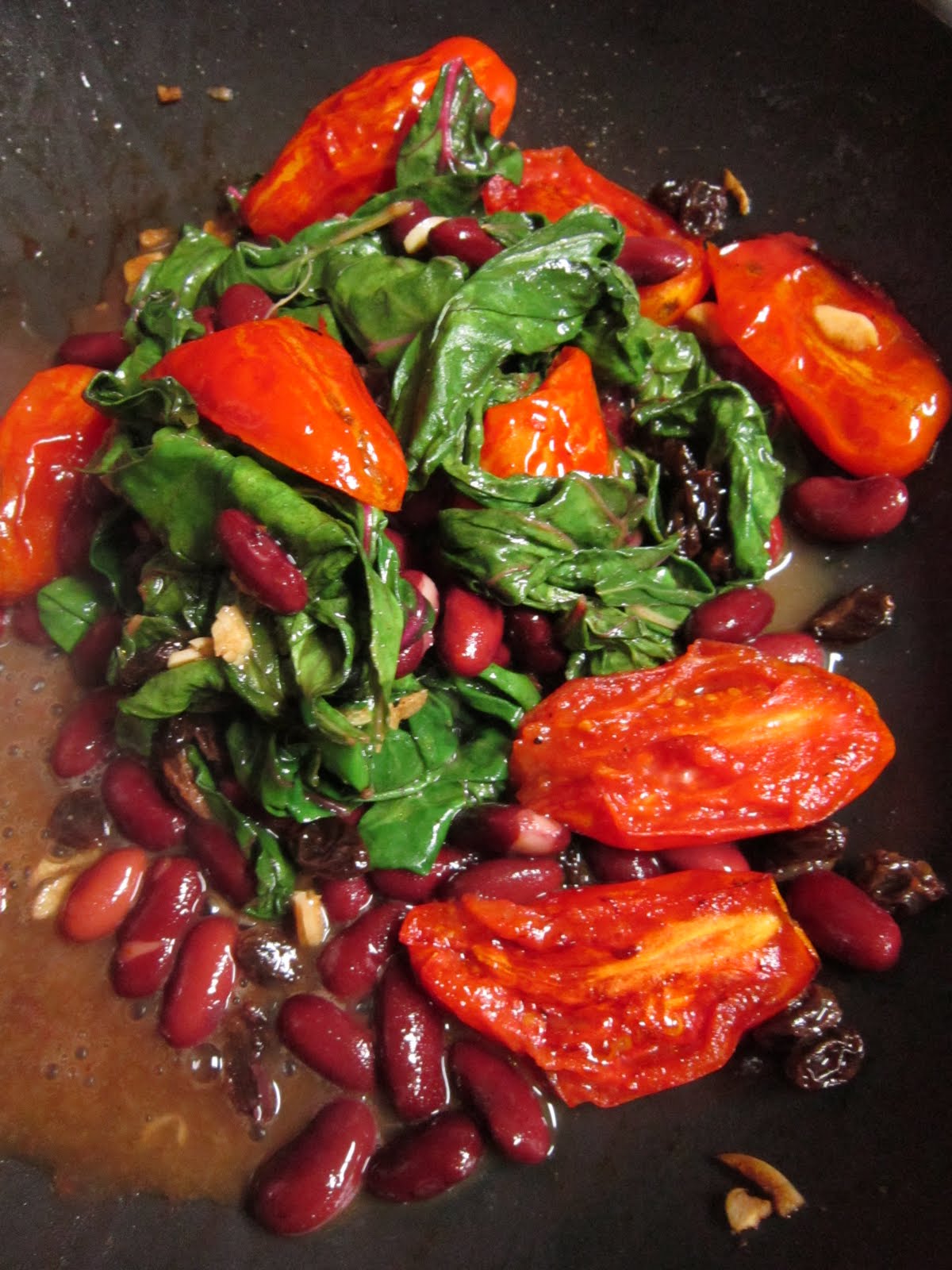
Chard with Pan Roasted Tomatoes and Kidney Beans


     Two Tasty Tuesday posts in a row again. I'm slacking. Actually that's not the case. I've been busier than ever as of late. My own personal garden and the Towson University Urban Farm (Check out the garden on Facebook) are producing more delicious vegetables than I know what to do with. I've began to explore the world of food preservation and I'm working on a few blog posts on the topic that will be coming soon. 

     Speaking of the Towson University Urban Farm, I picked tons of fresh rainbow chard yesterday and due to a lack of refrigerator space I decided to have some for dinner. This week I give you chard with pan roasted tomatoes and kidney beans. The tomatoes used in this recipe are from my garden (they are a Cassady's Folley heirloom variety). This turned out to be a great recipe and the mixture went very well with the whole wheat couscous I pulled from my cabinet. The dish will go equally well with brown rice. Instead of using the kidney beans you can use chickpeas but I've consumed way too many chickpeas lately and decided to substitute kidney beans instead. Enjoy!

  • 1 cup of whole wheat couscous (or brown rice)
  • olive oil
  • several small tomatoes cut in half length-wise (cherry tomatoes will work just as well but you should increased the quantity used)
  • 1 bunch of chard (Swiss chard, rainbow chard, etc.) stems removed and leaves torn
  • Small handful of raisins (feel free to leave these out if you don't dig on raisins) 
  • garlic, 2 or 3 cloves, thinly sliced
  • salt and pepper to taste
  • 1 can of kidney beans or chickpeas
  • 2 tablespoons of lemon juice

  1. Cook the couscous in a small pot (I use a ratio of 1 cup cous cous to 2 cups water)
  2. Heat the oil in a pan, add the tomatoes, cut side down, and let brown. This will take a few minutes. The tomatoes will become very soft so be sure not to mess with them too much. 
  3. Once browned, turn tomatoes over and cook for an additional minute. Carefully transfer the tomatoes to a plate.
  4. Add the chard, garlic, raisins, a little water, salt and pepper to the pan. Cook, tossing until the chard wilts.
  5. Return the tomatoes to the pan, add the kidney beans (or chickpeas) and the lemon juice and toss until the mixture is heated through.
  6. Serve over couscous or brown rice.

A little bit of chard

EXTREME CLOSE-UP!

Tear the chard into large pieces. The heirloom tomatoes wait.....

Brown the tomatoes in olive oil.

Toss in the chard

Return the tomatoes to the pan and add kidney beans and lemon juice

Take care of yourself and each other...

Tuesday, August 16, 2011

Tasty Tuesday!

Chickpea and Kale Soup


     Some people think that soup is only for the winter. I don't like these people. Soup is great anytime and I was craving some this past week. This is a great soup recipe especially now that kale is plentiful and in season. It's also really easy and is enough to feed a small group. I hope you like it.

  • 1 large onion chopped
  • 2 carrots, diced
  • A handful of sliced button mushrooms (or whatever is handy)
  • 4 cloves of garlic, minced
  • 1 1/2 tsp. cumin
  • 1/2 tsp. paprika
  • 1/4 tsp. cayenne (optional)
  • 1/2 tsp. ground ginger or a little grated fresh ginger 
  • 2 bay leaves
  • 1/4 tsp. cinnamon
  • 2 cans of chickpeas, drained
  • 64oz vegetable broth
  • 1 large bunch of kale, chopped and ribs removed
  • about 2 cups of water
  • salt and pepper to taste

  1. In a large pot heat olive oil, add onion and carrot, and cook over medium heat until onion begins to brown. Add the mushrooms and cook for a couple more minutes. Add the garlic and cook for an additional minute.
  2. Add the spices and cook, stirring for another minute or so. Make sure nothing burns!
  3. Add the chickpeas and stir.
  4. Add the vegetable stock, bring to a boil, and reduce the heat to a simmer for 20 minutes.
  5. Add the kale and stir. If you need to add water to fully cover the kale do so now.
  6. Cook soup until kale is tender (about 20 minutes)
  7. Add salt and pepper to taste

Dice the veggies using your Santoku knife.

Throw it in the pot and let it brown.

Add your mushrooms and stir

Add the spices then add the chickpeas. Give the mixture a good stir.

Add the vegetable stock and simmer for about 20 minutes.

You should probably drink beer while you are waiting.

Add the kale and simmer until the kale is tender.

Take care of yourself and each other...

Monday, August 15, 2011

Ezra and Ben have a beer with Brad


    You know, it's funny how things work out. I'm not sure if I'm the only person that does this but when I'm with a close friend I often think about the first time I saw them. Not when I officially "met" them, but when I first "saw" them. I have a lot of close personal friends today that I would see from time to time either wandering the halls of a building where I worked, sitting in the front of a classroom, or maybe even just walking around town. We didn't have a relationship then and at the time I never thought I would ever get to know them. But, after a chance meeting here, or a slightly awkward elevator ride there, we began to talk and the next thing you know I usually ended up spending the majority of my time with them. I have even ended up becoming great friends with people that I used to make fun of in my younger more critical/bullying days (no names). I didn't even know them at the time but for some reason I felt the need to jeer them. Kids are just cruel I suppose.

     When I do take the time to reflect on such events and beginnings of relationships one common theme always emerges. When I first met my "now friend" they always seemed much taller when I didn't know them. It is as if I literally had to look up to them at first and over time they all shrank down to my eye level. Anyone else feel the same way or is it just me?

     Anyway, this post isn't really about that per se. This post is about reconnecting with old friends. I first met Ezra and Ben when we all took a biology job out west. We parted ways a couple of years ago and somehow life reunited us over 2200 miles from where we first met. Life can be a funny thing sometimes.

     If you have any similar stories or want to share some of your own idiosyncrasies I'd love to hear them. Leave a comment.

Take care of yourself and each other...